
Article: What Size Wall Clock Do I Need? A Complete Room-by-Room Guide
What Size Wall Clock Do I Need? A Complete Room-by-Room Guide
Choosing a wall clock should be simple. Then you hold a tape measure against the wall, realise that 40cm looks very different above a sideboard than it did on your phone, and suddenly it feels like a major interiors decision.
The good news is that there is no single “correct” clock size. The right choice depends on the wall, the furniture beneath it, how far away you will view it from and whether you want the clock to blend in or become the room’s focal point.
This room-by-room guide will help you judge the scale before you buy — and avoid the rather deflating sight of a beautiful clock looking slightly lost on a large wall.
The quick wall clock size guide
At Thomas Kent, our wall clocks fall into four practical size groups:
| Clock size | Diameter | Often works well in |
|---|---|---|
| Small wall clocks | Up to 30cm | Bedrooms, home offices, gallery walls and narrow spaces |
| Medium wall clocks | 31–45cm | Kitchens, hallways and above smaller consoles |
| Large wall clocks | 46–60cm | Living rooms, dining rooms, mantels and sideboards |
| Oversized wall clocks | Over 61cm | Feature walls, high ceilings and open-plan spaces |
These are useful starting points rather than unbreakable rules. A clean, open-faced clock can feel lighter than an ornate design of the same diameter, while a dark frame on a pale wall may have much more visual presence.

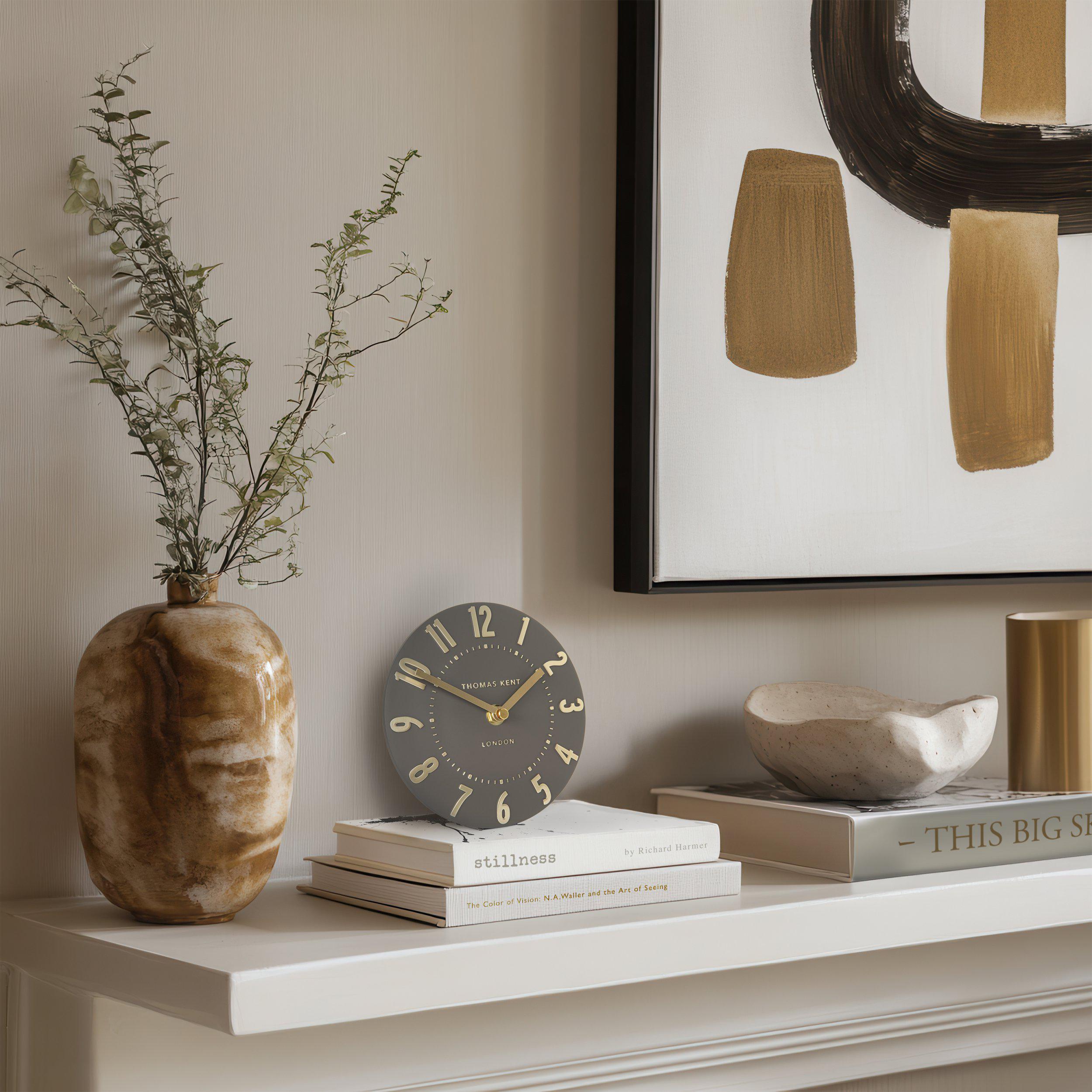
Small but considered: the Bistro Misty Blue shows how a compact clock can still add colour and character.
Start with the wall, not the clock
Before browsing, measure the usable part of the wall rather than the entire room. Allow for door frames, shelves, light switches, picture rails and any furniture beneath the clock. Then stand back and decide what job the clock needs to do.
- For a quiet finishing touch: choose a smaller or medium clock with comfortable space around it.
- For a clear focal point: choose a large or oversized clock that confidently occupies the wall.
- For easy timekeeping across the room: prioritise a generous dial, clear numerals and strong contrast.
If the clock will hang above furniture, a useful starting point is for it to measure roughly half to two-thirds of the furniture’s width. This is not a strict formula, but it usually creates a pleasing sense of balance.
What size clock works best in a living room?
A living room can usually carry more scale than we first imagine. From a sofa or armchair, a clock needs enough presence to be read comfortably and to hold its own among larger furniture.
For most living rooms, a large clock between 46cm and 60cm is a strong starting point. On a broad feature wall, above a long sofa or in an open-plan room, an oversized clock over 61cm can feel more proportionate.
Above a sofa, begin by comparing the clock with the sofa’s width. A clock around half to two-thirds of that width will usually look intentional without overpowering the seating. If that sounds enormous, make a paper template first — walls have a habit of making objects look smaller.
Explore our living room clocks for designs suited to the heart of the home.
What size clock should I choose for a kitchen?

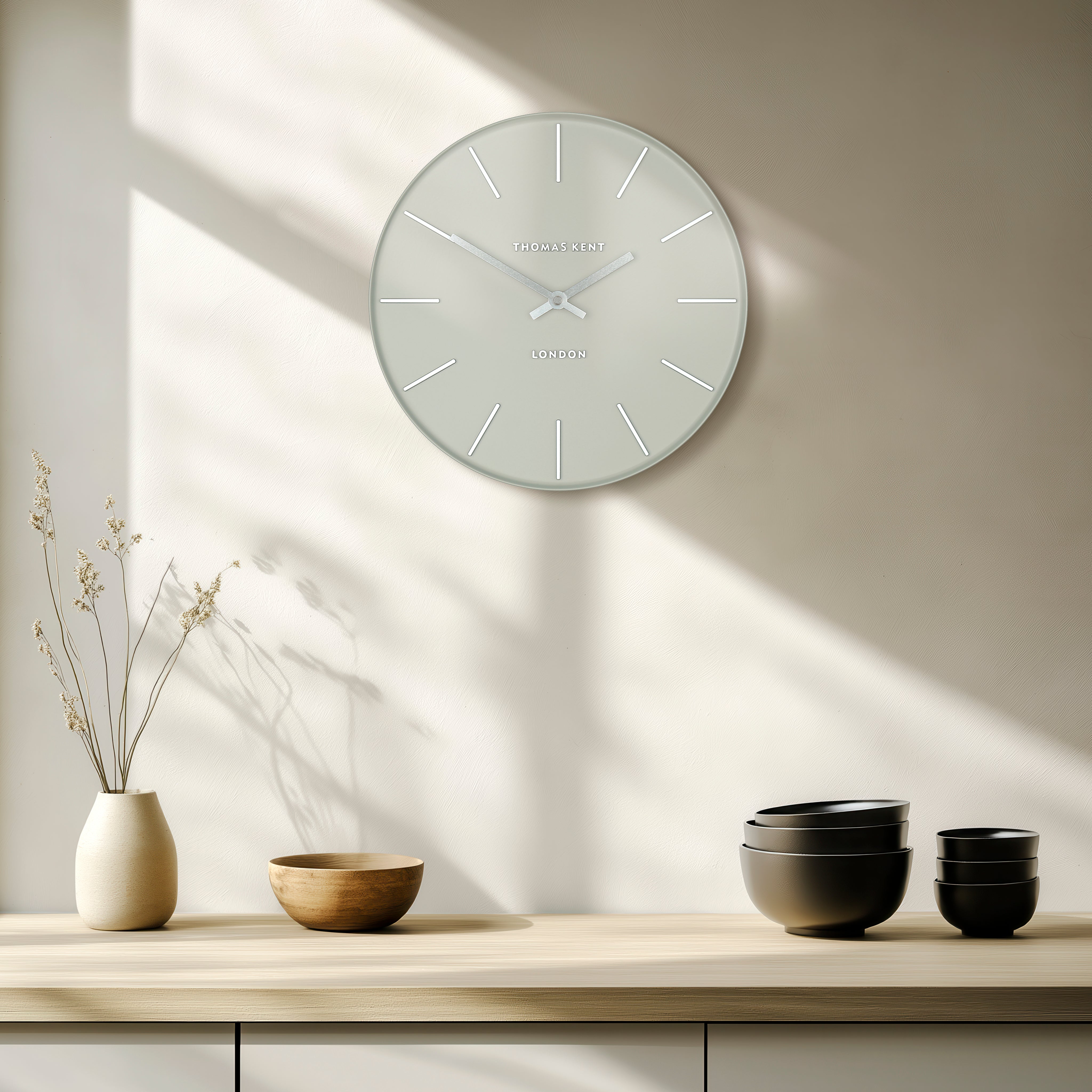
A medium clock such as Cuckoo Smoke fits comfortably into a busy kitchen without becoming lost.
In a kitchen, visibility and placement matter as much as diameter. You may be reading the time while cooking, making coffee or hurrying out of the door, so the dial should be clear from the places where you naturally stand.
A medium clock from 31cm to 45cm suits many kitchens: large enough to read easily, but compact enough to sit between cabinets, shelves or doorways. A small clock up to 30cm can work beautifully in a compact kitchen or breakfast nook.
If you have a generous blank wall or an open kitchen-dining space, consider a large clock. It can help connect the two areas and give the room a stronger focal point. Browse our kitchen clocks for inspiration.
What size clock should go above a sideboard or console?

The large Arabic Seagrass has enough presence to anchor furniture while leaving comfortable space around it.
A sideboard gives you a natural frame of reference. Measure its width and look for a clock that feels substantial but remains comfortably narrower than the furniture below it. Again, half to two-thirds of the sideboard’s width is a helpful place to begin.
Remember to include lamps, vases and framed photographs in the composition. If the sideboard is already busy, a simpler clock or slightly smaller diameter may give everything room to breathe. If the surface is deliberately minimal, a large or oversized clock can do more of the decorative work.
Try to leave a comfortable gap between the top of the furniture and the bottom of the clock. Around 15–25cm is often useful, although taller accessories and the height of the room may call for more.
What size clock works above a mantel?
For a clock above a fireplace, measure the mantel or chimney breast rather than the entire wall. The clock should normally sit within the mantel’s outer edges, with enough open space around the frame to stop the arrangement feeling cramped.
A medium or large clock works in many rooms, while a tall chimney breast can take an oversized design. Check the depth as well as the diameter: a deep frame should sit safely clear of the mantel edge and any decorative objects.
If your mantel already holds several pieces, remove them temporarily while testing the clock size. It is much easier to build the arrangement around the main feature than to squeeze a clock into a display that is already full.
What size clock is right for a dining room?
Dining rooms often benefit from a clock with a little drama. A large clock can anchor a sideboard or dining area, while an oversized clock can make an elegant statement on a long, otherwise empty wall.
Consider the main view into the room. If the clock is visible from a doorway or an adjoining kitchen, choose a size and dial that remain clear at that distance. In a smaller dining space, a medium clock can still create impact when its colour contrasts with the wall.
What size clock should I use in a hallway?
Hallways tend to have narrower walls and shorter viewing distances, so a small or medium clock is often enough. On a slim wall between doors, a clock up to 30cm can feel neatly proportioned; above a console table, 31–45cm often gives a stronger, more finished look.
Do check the clock’s depth in tight passageways. A shallow profile is less likely to feel intrusive, especially where people pass close to the wall.
What size clock works in a home office or bedroom?
In a home office, the clock should be easy to glance at without dominating your eyeline. Small and medium clocks are usually ideal, particularly above a desk or on a nearby wall. See our home office wall clocks for designs that keep time without making the room feel like a railway platform.
Bedrooms generally suit a calmer scale. A small clock can add character above a chest of drawers or on a narrow wall; a medium clock works well when the wall is more open. If visual quiet matters to you, choose a clean dial with generous space around it.
How high should a wall clock be hung?
As a general guide, position the centre of the clock close to eye level — often somewhere around 145–160cm from the floor. Treat that range as a starting point, not a commandment. Your own height, ceiling height and the furniture below will all affect what looks right.
Above a sofa, mantel or sideboard, judge the clock as part of the whole arrangement. Hanging it too high is one of the most common mistakes: the clock should feel connected to the furniture, rather than floating towards the ceiling.
Before drilling, sit in the room as well as standing in it. A clock that looks perfectly placed from the doorway may feel too high from the sofa.
The cardboard-template trick
This is the easiest way to test a wall clock size at home:
- Check the full outer diameter of the clock — frame included.
- Cut a circle from spare cardboard, paper or taped-together newspaper to the same size.
- Fix it to the wall with low-tack tape.
- View it from the doorway, your usual seat and the far side of the room.
- Leave it there for a day if you are unsure.
You will quickly see whether the proposed clock feels lost, balanced or a little too enthusiastic. You can also mark the centre point on the template, making the final hanging position much easier.
Common wall-clock sizing mistakes
- Choosing too small: a clock can look substantial in a product photograph but disappear on a large wall.
- Hanging it too high: this separates the clock from the furniture and makes the room feel less settled.
- Ignoring the frame: always use the full outer diameter, not just the visible dial.
- Forgetting depth: important in hallways, above mantels and beside opening doors.
- Competing with clutter: give a statement clock enough empty wall to make its shape clear.
- Testing from only one position: check the view from wherever you will actually read the time.
Wall clock size FAQs
What is a standard wall clock size for a living room?
There is no universal standard, but a large wall clock between 46cm and 60cm works well in many living rooms. Bigger rooms, high ceilings and wide feature walls can often accommodate an oversized clock over 61cm.
How big should a clock be above a sofa?
As a starting point, look for a clock around half to two-thirds of the sofa’s width. The design’s visual weight matters too, so test the diameter with a paper or cardboard template before fixing it to the wall.
Can a wall clock be too big?
Yes — especially if its frame sits too close to a doorway, ceiling, furniture or architectural detail. An oversized clock should feel confident, but it still needs breathing room around its outer edge.
Can I put a large clock in a small room?
Absolutely. One generously sized clock can make a small room feel more considered than several little decorations. A simple dial, clear surrounding space and a well-chosen position will keep it from feeling crowded.
How do I measure a wall clock?
Use the clock’s full outer diameter from edge to edge, including the frame. For unusually shaped designs, check both the maximum width and height, along with the depth from the wall.
The simple answer
The right wall clock should feel connected to the room around it. Measure the usable wall, compare the clock with nearby furniture and test the proposed diameter at full size. When in doubt, a little more presence often looks better than a clock that feels timid — provided you leave it room to breathe.
You can shop by size through our small, medium, large and oversized wall clock collections. And if you are deciding where your new clock should live, read The 5 Places Every Home Needs a Clock next.